


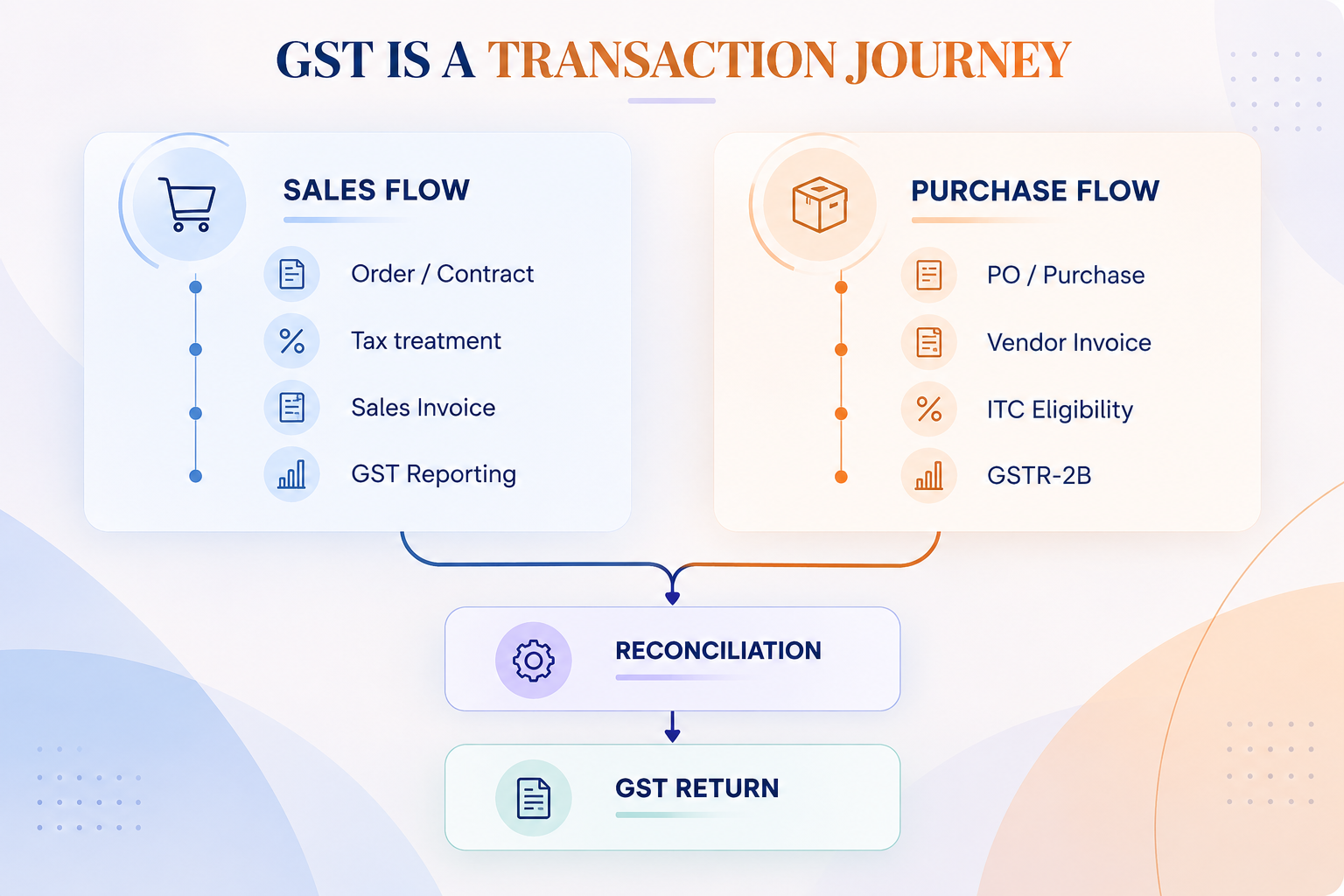




GST visibility starts with the vendor transaction. Vendor-side errors and filing gaps directly affect invoice matching and ITC visibility, while payment timelines often require action before every GST discrepancy is resolved. The focus is therefore on identifying exceptions early and bringing the right issues to attention.
Our Process
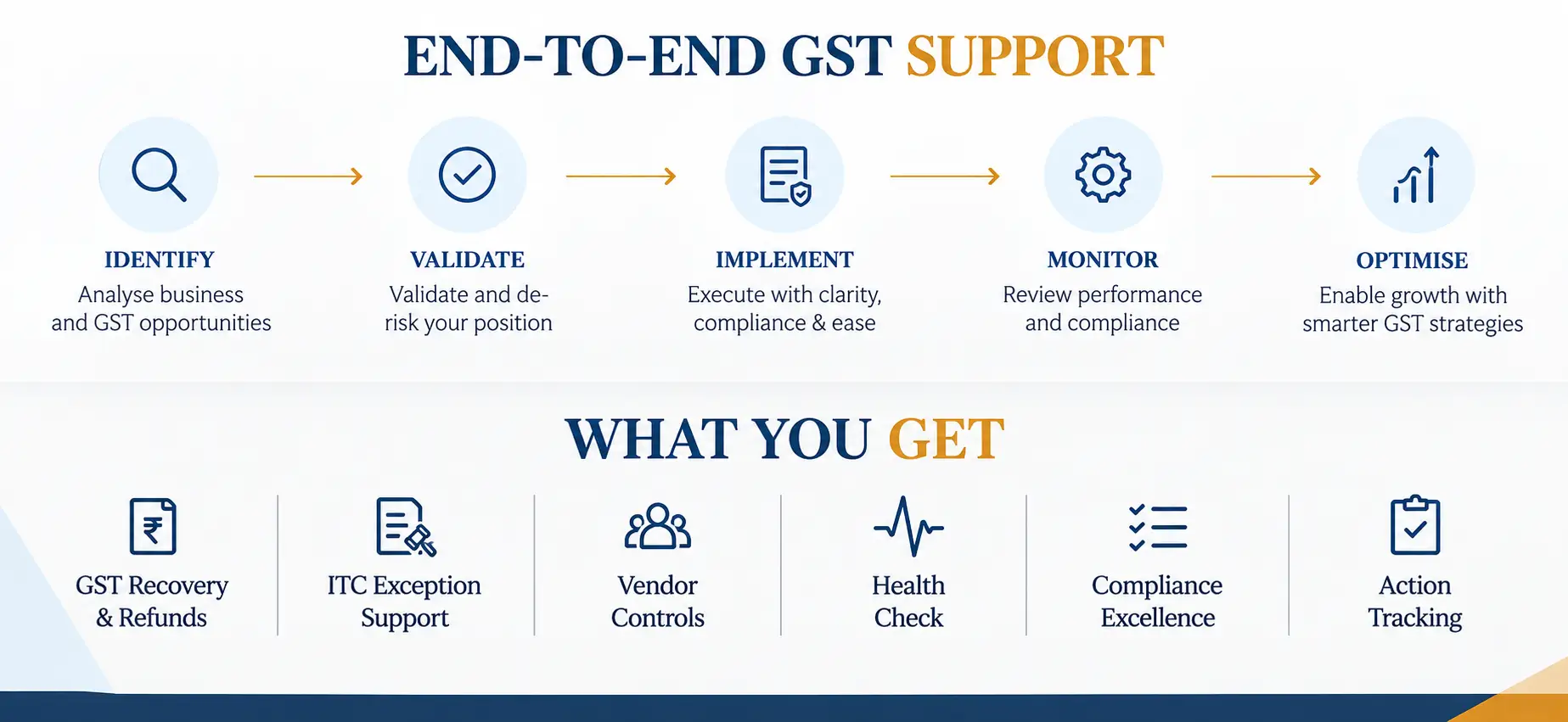
Identify vendor-related GST exceptions, assess invoice and ITC mismatches, determine the underlying reasons and coordinate appropriate follow-up for resolution.
What it delivers
A clearer view of vendor-related GST exposure, better visibility over ITC and a structured mechanism for addressing exceptions without allowing the same issues to repeatedly flow into the next compliance cycle.

GST compliance is a recurring process with fixed deadlines, irrespective of whether every underlying issue has been resolved. The focus is on bringing structure to the monthly cycle while keeping visibility over exceptions and unresolved matters.
Our Process
Manage the GST compliance cycle through review of relevant data, return workings, reconciliations and filing requirements, with specific attention to exceptions requiring resolution or decision.
What it delivers
A more predictable compliance cycle, reduced last-minute pressure and clear visibility over what has been completed, what remains unresolved and what requires attention.

GST paid or accumulated does not always translate into GST recovered or utilised. Unclaimed ITC, eligible refunds, excess payments and other recoverable amounts can remain embedded within the tax cycle.
Our Process
Analyse available GST data to identify legitimate recovery and refund opportunities, validate the underlying position and quantify areas where tax remains recoverable or under-utilised.
What it delivers
Improved ITC utilisation, identification of refund and recovery opportunities and greater visibility over GST amounts that would otherwise remain locked or overlooked.

Recurring GST issues often indicate a weakness in the underlying process rather than isolated filing errors. A health check looks at where GST-related effort is being consumed, where exceptions originate and why the same issues continue to recur.
Our Process
Review the transaction-to-compliance flow, analyse recurring exceptions and identify process, control and hand-off gaps that contribute to avoidable GST effort or risk.
What it delivers
A clearer understanding of root causes, practical process improvements and a more streamlined GST workflow with reduced repetitive effort and stronger controls.

For businesses engaged in international trade, GST and Foreign Trade Policy often intersect at the transaction level. Export-import benefits, documentation, GST treatment and refund considerations need to work together rather than being addressed independently.
Our Process
Assess the GST and FTP implications of relevant transactions, identify applicable benefits and examine gaps in documentation, treatment or compliance.
What it delivers
Better alignment between the transaction, GST and FTP requirements, with improved visibility over available trade benefits and reduced risk of avoidable compliance gaps.

GST disputes often originate in the transaction itself—through an incorrect interpretation, tax treatment or inadequate supporting documentation. The issue therefore needs to be understood from its factual and technical foundation rather than only at the notice stage.
Our Process
Examine the underlying transaction, applicable GST provisions and supporting records to develop a fact-based understanding of the issue and the position taken.
What it delivers
Greater clarity on complex GST positions, stronger supporting documentation and a more robust basis for dealing with notices, departmental queries, assessments and disputes.